

Discipline
Specialisation
Profile
See also
Gender
Life
Professor, curator, philologist, archaeologist and epigrapher, born in Aalst on 3 January 1868 and died in Sint-Pieters-Woluwe (Brussels) on 14 August 1947.
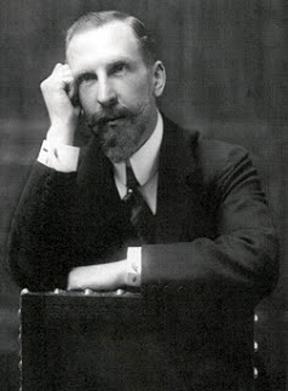
Franz Cumont, 1920, Bebelio, Wikimedia Commons, public domain.
Biography
After completing his secondary education at the Royal Athenaeum of Brussels, Cumont continued his studies at the University of Ghent. In 1887, he obtained a doctorate in classical philology and was awarded a travel scholarship that took him to Bonn, Berlin, Vienna, Athens, Rome and Paris. In 1892 – at the age of only twenty-four – Cumont was appointed lecturer at the University of Ghent. Four years later, he was promoted to full professor of classical philology.1
Following his first European travels, Cumont undertook his first long-distance journey in 1900, travelling for two months with his brother Eugène to the region of Pontus in Asia Minor.2 Five years later, he travelled to northern Syria in search of traces of Emperor Julian's journey to Ctesiphon (Iraq). Following a trip to the United States and his meeting with the American Middle Eastern specialist J. Breasted (1865–1935), Cumont undertook two further research expeditions to Dura-Europos (Syria), in 1922 and 1923.3 Cumont used his travels to expand the archaeological and art-historical collections of the Musées royaux des Arts décoratifs et industriels, now the Royal Museums of Art and History, with new acquisitions. From July 1899 onwards, Cumont served there as an honorary, unpaid curator of classical antiquities. In 1901, he was promoted to the position of delegated curator.
In 1910, Cumont was passed over for the chair of Roman history at the University of Ghent. Although the faculty was unanimously in favour of his appointment, political disagreements proved decisive: the Catholic Minister of Arts and Sciences at the time refused to appoint the liberal-minded Cumont to the chair of Roman history. The so-called 'Cumont affair' marked a major rupture in Cumont's professional life. Bitterly disappointed, Cumont submitted his resignation from the university. Despite strong national and international protests, it was accepted in May 1911. Shortly afterwards, the government re-organised the Musées Royaux des Arts décoratifs et industriels, resulting in the abolition of Cumont's position there as well. He subsequently left Belgium and divided his time as a researcher mainly between Rome and Paris.4 Nevertheless, he remained involved with the museum as an adviser.5 Although Cumont was physically far removed from Belgium, he nevertheless succeeded in transferring the site of Apamea in Syria to Belgian archaeologists. Fernand Mayence was placed in charge of the site.6
In his will, Cumont bequeathed his library and his Roman apartment to the Academia Belgica in Rome, of which he was president, stipulating that the rental income from the apartment should be used to maintain the library.7 In addition to the quinquennial prize for the history of science, which he received in 1910, Cumont was also awarded the Francqui Prize in 1936.8
For a long time, there was debate as to whether Franz Cumont was a Freemason. The discussion was recently revived following the discovery of three letters bearing the monogram “FC” and three dots. Nevertheless, it seems more likely that the letters belonged to his brother Fernand Cumont.9
Collections
Alongside his work as a philologist and historian at the university, Cumont was also highly active as a curator and collector for various museums. At the Musées royaux des Arts décoratifs et industriels, Cumont and his colleagues sought to fill gaps in the existing museum collection. In his view, for example, Greek and Roman sculpture still required further attention. Local individuals, such as the wealthy industrialist and collector Raoul Warocqué, as well as institutions with which he maintained connections, donated archaeological objects to the museum on several occasions. At the same time, he carefully monitored collections that were offered for sale. Together with Jean De Mot, Cumont succeeded in raising funds to acquire, in three instalments (1901, 1904 and 1907), various pieces from the collection of Léon Somzée (1837–1901). When funds were insufficient to acquire particular objects, Cumont sometimes financed the purchase himself. Finally, he donated an object from his personal collection to the museum.10
Cumont was also involved with what is now the Musée Royal de Mariemont. He managed the collections and actively assisted, together with Jean De Mot and Jean Capaert, among others, in shaping his friend Raoul Warocqué's acquisition policy. Warocqué was at the time the owner of the Mariemont estate and a collector of antiquities. Cumont was also responsible for numerous donations to this collection.11 The three museum researchers at Mariemont jointly published a catalogue of the collections. Moreover, through his relationship with Warocqué, Cumont was able to influence the future of the Mariemont estate in his capacity as an adviser. Ultimately, Warocqué's decision to donate the estate to the Belgian State was in line with Cumont's vision. Even after Warocqué's death, Cumont remained associated with the Mariemont estate: he was entrusted with the management of its Roman, Greek and Egyptian antiquities.12
A few years later, he complemented his experience with Warocqué's estate through his close involvement in the donation of Gaasbeek Castle to the Belgian State, which took place in 1921. From March 1911 onwards, he acted as the right-hand man of his friend, the Marquise Marie Arconati Visconti (1840–1923), owner of the castle and its collection, during the donation process. He handled a large part of the negotiations, both through personal meetings and correspondence. Moreover, he influenced the contents of the deed of donation and even signed it as one of the marquise's honorary witnesses.13
Publications
Cumont left behind a rich body of scholarly publications. Most of his writings deal with the history of religions, and more particularly with Eastern influences on Roman paganism. One of his best-known publications is his study Les religions orientales dans le paganisme romain (1906), which was translated into German (1910), English (1911) and Italian (1913).14 He had already laid the foundations for this approach in his doctoral dissertation, Alexandre d'Abonotichos. Un épisode de l'histoire du paganisme au IIe siècle de notre ère (1887). His dissertation on the spread of the cult of Mithras earned him a travel scholarship in 1889. Between 1894 and 1900, Textes et Monuments relatifs aux Mystères de Mithra and Les Mystères de Mithra (1900) were published.15
Before his appointment as curator of the Musées royaux des Arts décoratifs et industriels, Franz Cumont worked at the Porte de Hal Museum, where he published the Catalogue des Sculptures et Inscriptions antiques (Monuments lapidaires). In addition to his research on Eastern religions, Cumont also took an interest in the religious history of Belgium, particularly the period during which it became Romanised. He devoted a book to the subject, entitled Comment la Belgique fut romanisée (1914). Epigraphy was another of Cumont's interests. Following his journey to the Middle East, he compiled a volume entitled Inscriptions chrétiennes d'Asie Mineure (1895).
In the 1940s, Franz Cumont worked on the afterlife in Roman religions. On this subject, he published Recherches sur le symbolisme funéraire des Romains in 1942.
A complete edition of Franz Cumont's bibliography can be downloaded here.
Letters by Cumont
The Academia Belgica holds a large number of letters written by Cumont. These can be searched in the Cumont database.
The Gaasbeek Castle also holds the “Franz Cumont bequest” in its archives. These personal archival materials were transferred to the castle in 1976 through the intervention of the executors of the estate of Mr G. Lockem, honorary curator of the castle. The bequest contains 422 letters written by Marie Peyrat to Franz Cumont between 1905 and 1923, as well as a manuscript by Franz Cumont entitled Souvenirs sur la marquise Arconati et son entourage. This manuscript was published and annotated by former curator Dr G. Renson. The bequest also contains correspondence relating to Alphonse Peyrat.
Bibliography
- Mélanges Franz Cumont, Brussel, 1936.
- "Franz Cumont", in: Isis,1948, 38 (3-4), 246.
- Hommages à Joseph Bidez et à Franz Cumont, Brussel, 1949.
- "Notices", in: Fasti Archaeologici, 1949, II.
- La commémoration de Franz Cumont à Rome', 13 janvier 1949, Brussel, 1949.
- "In memoria di Franz Cumont", in: Problemi attuali di scienza e di cultura, Rome, 1950.
- "Cumont, Fr.", in: Encyclopedia Britannica, 1965, 6, 895.
- "Cumont, Fr.", in: Chamber's Encyclopedia, 1967, 4, 300.
- BONGARD-LEVINE, Grégory, BONNET, Corinne, Litvinenko, Yuri en MARCONE, Amaldo, Mongolus Syrio salutem optimam dat: La correspondance entre Mikhaïl Rostovtzeff et Franz Cumont, Parijs: De Boccard, 2007.
- BONNET, Corinne, "Cumont, Franz", in: POUILLON, F. (red.), Dictionnaire des orientalistes de langue française, Parijs, 2009, 247-248.
- BONNET, Corinne, "Franz Cumont : entre ciel et terre", in: BONNET, Corinne, PIRENNE-DELFORGE, V. en PRAET, D., (red.), Les religions orientales dans le monde grec et romain. Bilan et perspectives, Rome - Brussel 2009, 17-22.
- BONNET, Corinne, “ Un réseau européen : la correspondance de Franz Cumont”, in: JACOB, C. (red.), Lieux de savoir. I. Espaces et communautés, Paris, 2007, 1072-1094.
- BONNET, Corinne, L'histoire séculière et profane des religions (F. Cumont) : observations sur l'articulation entre rite et croyance dans l'historiographie des religions de la fin du XIXe et de la première moitié du XXe siècle", in: SCHEID, John (red.), Rites et croyances dans les religions du monde romain, Entretiens sur l'Antiquité classique LIII, , Vandoeuvres : Fondation Hardt, 2007, 1-37.
- BONNET, Corinne, Le grand atelier de la science. Franz Cumont et l'Altertumswissenschaft. Héritages et émancipation. Des études à la première guerre mondiale (1888-1923), Rome: Institut Historique Belge de Rome, 2005, 2 vol.
- BONNET, Corinne, Entre Terre et Ciel. Parcours historiographique en "hauts-lieux" sur les traces de Franz Cumont et d'autres historiens des religions, Archiv für Religionsgeschichte, 2005, 7, 5-19.
- BONNET, Corinne, " Rééditer Franz Cumont : pourquoi ? comment ?" in: Anabases, 2006, 4, 267-270
- BONNET, Corinne " Mise en perspective épistolaire. « Denn ich denke oft im Stillen an Sie. » Hermann Diels et Franz Cumont : la filiation intellectuelle à l’épreuve de la guerre 14-18", in: Anabases, 2009, 10, 99-110.
- BONNET, Corinne, " Un Cumont peut en cacher un autre... À propos de l'appartenance de Franz Cumont à la franc-maçonnerie", in:Anabase, 2008, 8, 197-203.
- BONNET, Corinne, “L’"affaire Cumont" entre science, politique et religion”, in Science, religion and politics during the modernist crisis, Belgisch Historisch Instituut te Rome, 2018.
- BOYANCE, P., "Rome, la Grèce et l'Orient d'après Franz Cumont", L'Information littéraire, 1949, I, 22-26.
- BRUWIER, Marie-Cécile, TILLIET-HAULOT, Marie-Françoise & VERBANCK-PIERARD, Annie (éd.), Franz Cumont et Mariemont, Morlanwelz : Musée royal de Mariemont, 2005.
- CANET, L., "Franz Cumont (1868-1947)", in:' 'Lux Perpetua'', Parijs, 1949, VII-XXX.
- DE RUYT, Franz, "Franz Cumont, prince et mécène de l'érudition belge à Rome", in:Revue Générale Belge, 1947, 23, 767-772.
- DE RUYT, Franz, "Le don royal de Franz Cumont à l'Academia Belgica à Rome", in:' 'Alumni'', 1947, XVI (4), 189-193.
- DE RUYT, Franz, "Het vorstelijk Geschenk van Franz Cumont", in: Streven, 1947, I (2), 182-186.
- DE RUYT, Franz, "Franz Cumont (1868-1947), in:L'Antiquité Classique, 1947, XVI (I), 5-11.
- DE RUYT, Franz, " Notice sur Franz Cumont", in:Annuaire de l'Académie royale de Belgique, 1981, 99-114.
- DE VISSCHER, F., "La manifestation Franz Cumont (Rome, le 7 mai 1947), in:L'Antiquité Classique, 1947, XVI (1), 13-28.
- DE VISSCHER, F., "La commémoration Franz Cumont à Rome, 13 janvier 1949), in: L'Antiquité Classique, 1949, XVIII (2), 257-264.
- DUSSAUD, R., "Franz Cumont", in: Syria, 1949, 26, 168-172.
- EVERS, Cécile, "Collectors of ancient sculpture in:Belgium in the 19th century: Léon Somzée and Raoul Warocqué", in: Kölner Jahrbücher, 2007, 40, 21-30.
- FARAL, E., Éloge, in: Comptes rendus des séances de l'Académie des Inscriptions et Belles Lettres, Parijs, 1947, 529-535.
- FESTUGIÈRE, A. J., "Franz Cumont", in:Gnomon, 1949, 21, 272-274.
- FESTUGIÈRE, A. J., "Franz Cumont", in:Bulletin de l'Académie royale de Belgique. Classe des Lettres, 1973, LIX, 310-314.
- GRAN-AYMERICH, Ève, "Franz Cumont (1868-1947) et l'archéologie française", in:Mélanges de l'École française de Rome, Italie et Méditérranée, 1999, 111 (2), 525-539.
- KEIL, J., "Franz Cumont. Nachruf", in:Almanach der Osterreichischen Akad der Wissenschappen, 1948, 98, 206-210.
- KEIL, J., Franz Cumont. Nachruf, Wenen, 1949.
- LAMEERE, William, "Sur la tombe de Franz Cumont", Brussel, 1948.
- LAMEERE, William, "Au temps où Franz Cumont s'interrogeait sur Aristote", in:L'Antiquité Classique, 1949, XVIII (2), 279-324.
- LAMEERE, William, "Lettre", in:' 'Bulletin de l'Académie royale de Belgique. Classe des Lettres'', 1956, XLII, 378-379.
- LANNOY, Annelies, Het christelijke mysterie. De relatie tussen het vroege christendom en de heidense mysterieculten in het denken van Alfred Loisy en Franz Cumont, in de context van de modernistische crisis, Gent, 2012 (thèse de doctorat inédite).
- LERICHE, Pierre en GABORIT, Justine, "Franz Cumont, homme de terrain", in: Mélanges de l'École française de Rome, Italie et Méditerranée, 1999, 111 (2), 647-666.
- MAYENCE, Fernand, "Hommage à la mémoire de Franz Cumont à l'occasion de la remise de son buste à la Classe", in: Bulletin de l'Académie royale de Belgique. Classe des Lettres, 1956, XLII, 363-377.
- PAILLER, Jean-Marie, "Les religions orientales selon Franz Cumont. Une création continuée", in: Mélanges de l'École française de Rome, Italie et Méditerranée, 1999, 111 (2), 635-646.
- PAREE, D., Du rêve du collectionneur aux réalités du musée: l’histoire du musée de Mariemont (1917-1960), Universitaire Pers Brussel, 2017.
- PETTAZZONI, R., "Franz Cumont", in: Archivio della Società romana di Storia Patria, 1947, LXX, 188.
- PICARD, Ch., "Franz Cumont (1868-1947), in: Revue Archéologique, 1955, XLVI (2), 59-60.
- PRAET, Danny, “Cumont, Franz (1868-1947)”, UGentMemorie.
- PRAET, Danny en Stedelijk Museum Aalst, Brochure Aalstenaar Franz Cumont en de antieke mysterieculten.
- ROOS, A. G., "Herdenking van Franz Cumont", in: Jaarboek der Moninklijke Nederlandse Akademie van Wetenschappen, 1950-1952, 181-188.
- ROUSSELLE, Aline, "Franz Cumont et la science de son temps. Introduction", in: Mélanges de l'École française de Rome, Italie et Méditerranée, 1999, 111 (2), 501-506.
- SAMARAN, Charles, "Le souvenir français de Franz Cumont", in: '' Bulletin de la Classe des Lettres et des Sciences morales et politiques, 1967, 53, 564-567.
- SANDERS, G., "Cumont, Franz-Valéry-Marie", in: National Biografisch Woordenboek, 1964, I, col. 361-366.
- VERCAUTEREN, Fernand, "Une correspondance scientifique. Théodore Mommsen-Franz Cumont (1894-1901)", in: Bulletin de la Classe des Lettres et des Sciences morales et politiques, 1954, 40, 68-90.
- VERHOOGEN, Violette, "Franz Cumont. Conservateur-délégué honoraire", in: Bulletin des Musées royaux d'Art et d'Histoire, 1947, 4de serie, 19 (1-3), 105-110.
- WOUTERS, Emma, “Van de laatste kasteelvrouwe van Gaasbeek naar de Belgische staat: De schenking van het Kasteel van Gaasbeek (1899-1924)”, Onuitgegeven masterproef, KU Leuven, 2024.
External Links
Information about Franz Cumont’s correspondence can be found on the page of the Academia Belgica.